Services
AI chatbot & RAG development
Chatbots and AI search that answer from your documents, products and data — with a citation for every answer, and an honest “I don’t know” when the answer isn’t there.
A general-purpose chatbot knows the internet, not your business. Retrieval-augmented generation (RAG) fixes that: the system finds the right passages in your own content first, then answers from them. Done well, it is accurate and auditable. Done badly, it produces confident answers that happen to be wrong.
The difference is almost entirely in the retrieval layer — how documents are split, how search combines meaning and keywords, how results are re-ranked, and how quality is measured over time. That layer is what we build.
What we build
Chatbots and AI search we build
Website support chatbots
Answer customer questions from your help centre, policies and product pages, around the clock — and pass the conversation to a person when it should.
Product and catalogue assistants
Help shoppers find the right item and answer specification questions from real product data and real reviews, instead of from guesswork.
Internal knowledge assistants
One place to ask about SOPs, contracts, tickets and wikis, with a link back to the source document so your team can trust the answer.
Semantic site search
Search that understands what people mean rather than matching exact words — for catalogues, documentation and content libraries.
Document question-answering
Ask questions across PDFs, reports and scanned documents, with answers that quote the passage they came from.
Enrichment pipelines
Turn raw catalogue data, images and reviews into structured attributes that search, filters and recommendations can actually use.
How we build it
How we keep answers accurate
- Structure-aware chunking, so passages keep the context that makes them make sense
- Hybrid retrieval — vector search combined with keyword search
- Re-ranking with a cross-encoder, where most RAG systems are won or lost
- A citation on every answer, or an explicit “not found”
- Continuous evaluations, so quality does not silently drift as content changes
- Access controls, so people only get answers from documents they are allowed to see
How it runs
01
Chunk
structure-aware splitting
02
Embed
vectors + metadata filters
03
Retrieve
hybrid dense + keyword
04
Re-rank
cross-encoder scoring
05
Ground
answer with citations
Related work
Shipped, live, in use.
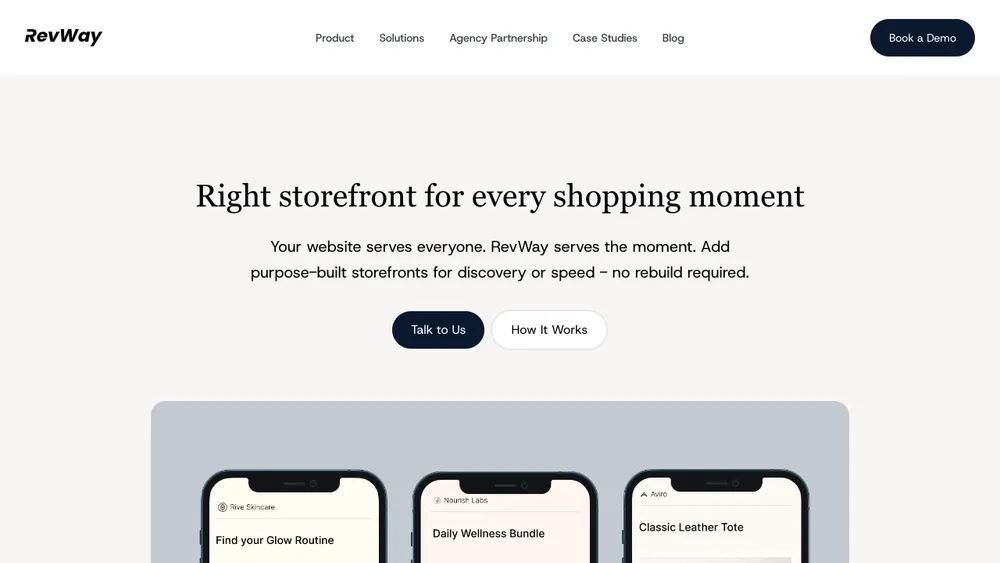
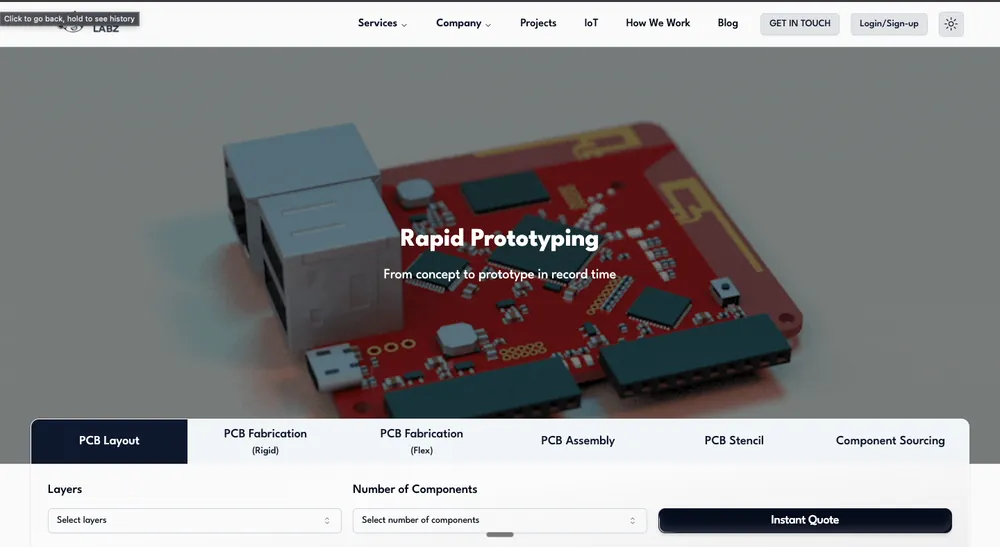
RevWay’s review Q&A answers shoppers from real customer text, on top of a Pinecone-backed semantic catalogue. Strom Labz pairs a hardware storefront with an in-context product chatbot.
Questions
Frequently asked
How is a custom AI chatbot different from ChatGPT?
ChatGPT answers from general knowledge. A custom chatbot answers from your content — your products, policies and documents — and can show where each answer came from. It also runs under your rules: what it may discuss, when it hands over to a person, and what it is never allowed to say.
How do you stop the chatbot from making things up?
By making retrieval good enough that the right passage is there, requiring every answer to cite it, and making “I don’t know” an acceptable answer. We then measure accuracy with an evaluation set built from real questions, and re-run it on every change.
What data can the chatbot use?
Websites, help centres, PDFs, product catalogues, databases, tickets, wikis and spreadsheets are all common sources. We build pipelines that keep the index up to date as that content changes, so answers do not go stale.
Where can the chatbot live?
On your website, inside your web or mobile app, or in the tools your team already uses, such as Slack. It is the same retrieval system underneath; only the interface changes.
Can it answer in Hindi or other languages?
Yes. Current models handle Hindi and most major languages well, and retrieval can work across languages — a question in Hindi can be answered from English source documents. We test quality in each language you need rather than assuming it.
How long does it take to build a RAG chatbot?
A working version on your real content usually takes three to four weeks. Production hardening — evaluations, monitoring, access control and integrations — typically adds another four to eight, depending on the number of sources.
Start here
Tell us what you are trying to build.
One call, no deck. We will tell you what we would build, what it would cost, and which parts you should not build at all.